
Provably Fair Casinos: Unveiling Transparency in Online Gaming
Imagine the thrill of hitting a jackpot, only to be haunted by the nagging feeling: “Was it really random?” This skepticism has long plagued the world of online casinos. Players often felt they had to blindly trust the operators, with no real way to verify the fairness of the games. Enter provably fair technology, a revolutionary concept that’s changing the game, literally.
Provably fair casinos offer a radical departure from traditional online casinos. Instead of relying solely on the casino’s assurance of fairness, provably fair systems leverage cryptography and blockchain technology to provide players with verifiable proof of each game’s outcome. In an age where trust in digital platforms is paramount, provably fair technology offers a much-needed layer of transparency, empowering players and fostering a more equitable gaming environment.
What is Provably Fair Gaming?
Provably fair gaming is a revolutionary approach to online gambling that brings unprecedented transparency and verifiability to the digital casino. The core principle is simple: empower players to independently verify the randomness and fairness of each game’s outcome.
Traditional online casinos rely on Random Number Generators (RNGs) that are periodically audited by third-party agencies. While these audits provide a degree of assurance, they often lack real-time transparency. Provably fair technology, on the other hand, utilizes cryptography and, often, blockchain technology to create a system where every roll of the dice, spin of the wheel, or flip of a card can be scrutinized.
At the heart of provably fair systems are cryptographic seeds and hashes. These elements work together to ensure that neither the casino nor the player can manipulate the outcome of a game. The player receives a seed, which influences the game’s result, and a hash of the server’s seed before the game begins. After the game, the server’s seed is revealed, allowing the player to verify that the outcome was indeed random and predetermined. The combination of these technologies marks a significant leap forward in establishing trust within the online gambling world, even though it does not guarantee 100% security.
How Provably Fair Technology Works
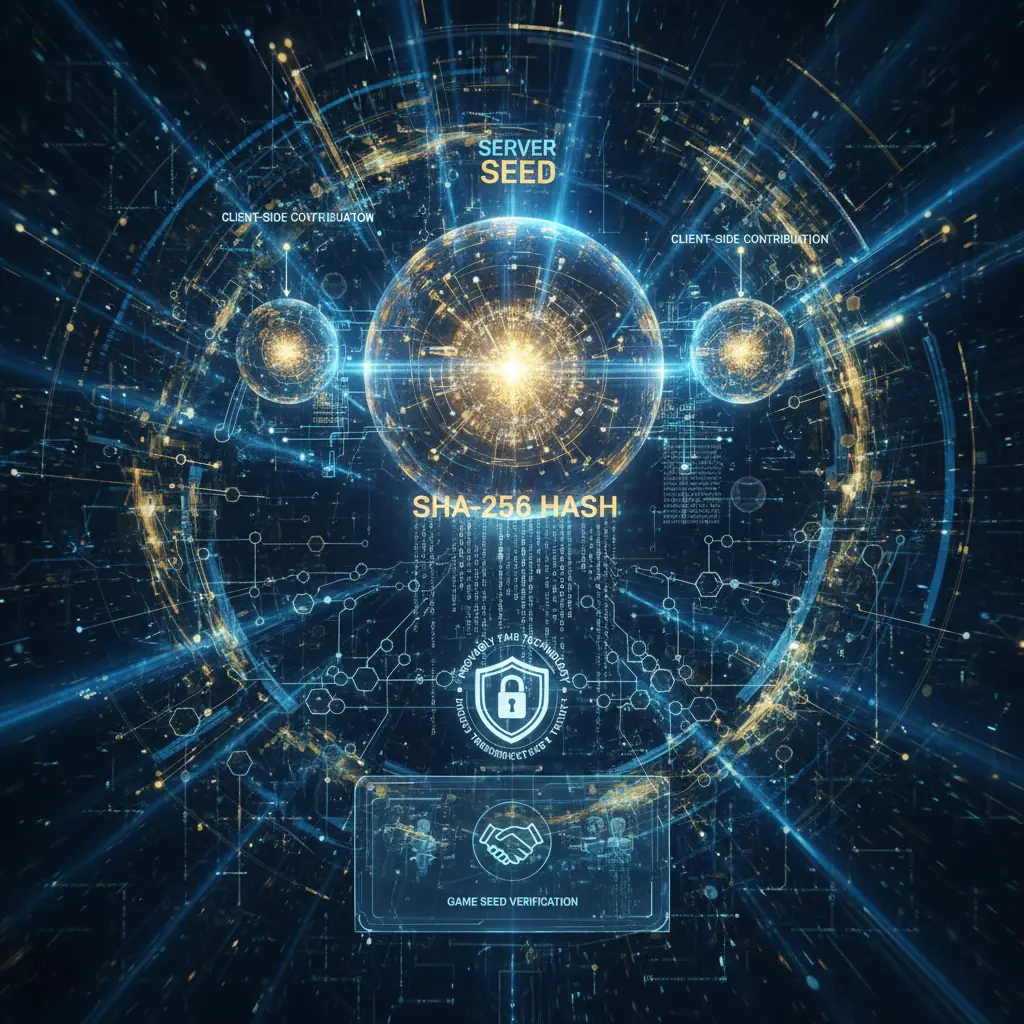
Provably fair technology is a revolutionary system used in crypto casinos to guarantee the fairness and randomness of game outcomes. It employs cryptographic algorithms to ensure that neither the casino nor the player can manipulate the results. The core components of provably fair systems include server seeds, client seeds, and nonces, all secured by cryptographic hashing, typically using SHA-256. Let’s break down how these elements work together to ensure a transparent and verifiable gaming experience.
Server Seed Generation
The server seed is a randomly generated string of characters created by the casino’s server before a game round begins. This seed is a critical component in determining the outcome of the game. To prevent any tampering, the casino doesn’t reveal the actual server seed directly. Instead, they create a cryptographic hash of the seed using the SHA-256 algorithm and publish this hash. Think of it like a locked box with a secret code inside. The hash acts as the lock, ensuring that the contents (the server seed) cannot be altered without breaking the lock. The casino commits to this specific server seed by publicizing its hash. If the casino tries to change the random number (the server seed) after bets are placed, it would break the cryptographic hash that was publicized. This ensures transparency and trust.
Client-Side Contribution
To guarantee fairness and prevent manipulation, players contribute to the randomness through a client seed. This client seed is a random string generated by the player’s browser or device. Players can also customize this seed to add their own unique input. The client seed ensures that the casino cannot fully predict the outcome in advance. By allowing players to influence the input, provably fair systems foster a collaborative randomness, aligning with the principles of decentralization inherent in blockchain technology. This mechanism makes the game more transparent and fair.
Verifying Fairness: A Step-by-Step Guide
Want to be sure the game you’re playing is on the level? You can actually check the fairness yourself! Online games that value transparency provide tools, but the process requires a bit of technical understanding. This guide breaks down how to verify game outcomes, ensuring transparency and trust in the process.
Locating Game Seeds
The first step is finding the seeds used to generate the game’s outcome. These seeds are the key to verifying fairness. There’s usually a server seed, a client seed, and sometimes a nonce. The server seed is controlled by the game provider, while the client seed is under your control. The nonce is a number that changes each round. These seeds are combined to create a unique game seed for each round. The location of where to find your seed is usually inside your account’s activity, or in the “provably fair” section.
Performing Manual Verification
Now comes the slightly more technical but fascinating part: manual verification. This is where you use a SHA-256 calculator to confirm the game’s outcome was indeed predetermined and hasn’t been tampered with. Here’s the general idea: Before the game, the server provides a hashed version of the server seed (using SHA-256). A hash is a one-way function; you can’t get the original seed back from the hash. After the game, the server reveals the original server seed. You then combine the server seed, client seed, and nonce (if applicable) to generate the game seed. Using that game seed, you can predict each outcome yourself. Here’s a critical safety tip: Always use a reputable, online SHA-256 calculator. Double-check the site’s security (HTTPS) and avoid entering any personal or sensitive information besides the seeds themselves. Remember, trust but verify – even the verifiers!
Benefits of Provably Fair Systems
Provably fair technology offers a multitude of benefits for both players and operators in online gaming and other systems where fairness is paramount. For players, the most significant advantage is increased trust. Knowing that the outcome of a game or process can be independently verified fosters a higher level of player confidence. This transparency eliminates the “black box” perception, where players are unsure if the system is truly random or manipulated.
The transparency inherent in provably fair systems leads to increased player confidence, fostering a more positive and engaged community. Players are more likely to return and spend more time on a platform they trust, contributing to long-term growth and sustainability.
Operators also reap substantial rewards. A provably fair system significantly bolsters their reputation. Demonstrating commitment to fairness and accountability can be a powerful marketing tool, attracting new players and differentiating the platform from competitors. Furthermore, provably fair systems dramatically reduce disputes. Because outcomes can be verified, disagreements about fairness become less frequent and easier to resolve. This translates into cost savings by minimizing the time and resources spent on dispute resolution. It can lead to reduced regulatory scrutiny, as authorities view provably fair platforms as more responsible and trustworthy.
Reduced disputes and enhanced reputation contribute to a more stable and predictable business environment. Operators can focus on innovation and growth, rather than constantly addressing concerns about fairness and potential manipulation.
Provably Fair Beyond Casinos: Other Applications
While often associated with online casinos, the principles of provably fair technology extend far beyond the realm of gambling. The core concept of verifiable randomness and transparency can revolutionize trust and accountability in diverse industries. Provably fair systems utilize cryptographic hash functions and seed values to ensure that the outcome of a process is unpredictable and, more importantly, verifiable by all parties involved.
One promising application lies within state lotteries. By implementing a provably fair system, lotteries can provide players with the means to independently verify that the winning numbers were indeed drawn randomly and without manipulation. The use of blockchain technology to record and distribute the seed values and hashing algorithms further enhances the transparency and immutability of the process. This level of verification builds public confidence and mitigates potential fraud concerns.
Prediction markets can also significantly benefit from provably fair methodologies. Ensuring fair settlement of outcomes and preventing insider trading are crucial for the integrity of these markets. Furthermore, the complex world of supply chain management stands to gain from the verifiability offered by provably fair systems. Tracking goods from origin to consumer, verifying authenticity, and ensuring ethical sourcing are all areas where blockchain-based provably fair solutions can improve transparency and build trust among stakeholders. The ability to trace a product’s journey and confirm its provenance with cryptographic certainty addresses many of the concerns surrounding counterfeit goods and unethical labor practices.
The Future of Trust and Transparency
The rise of provably fair gaming marks a pivotal shift, rippling outwards to redefine trust not only in online gambling but across the entire digital realm. Looking ahead, the demand for verifiable integrity will only intensify. Industries built on digital interactions will face mounting pressure to demonstrate trustworthiness, pushing trustless systems to the forefront.
Blockchain technology offers a promising path toward this transparent future. Its decentralized, immutable ledger provides a framework for verifiable computing, where every transaction and outcome can be independently audited. Imagine financial systems, supply chains, and even voting mechanisms underpinned by similar principles, creating a more accountable and equitable digital landscape.
Of course, the journey toward widespread adoption won’t be without hurdles. Regulatory frameworks must evolve to accommodate decentralized technologies, and user education will be crucial to fostering understanding and acceptance. Yet, the potential rewards – a digital world where trust is mathematically guaranteed, not blindly given – make the challenges well worth facing. The future of gaming, and indeed the future of online interaction, lies in radical transparency and provable fairness, ushering in an era of unprecedented user empowerment and confidence.